Fast-spinning asteroid 2025 MN45 rewrites rotation record
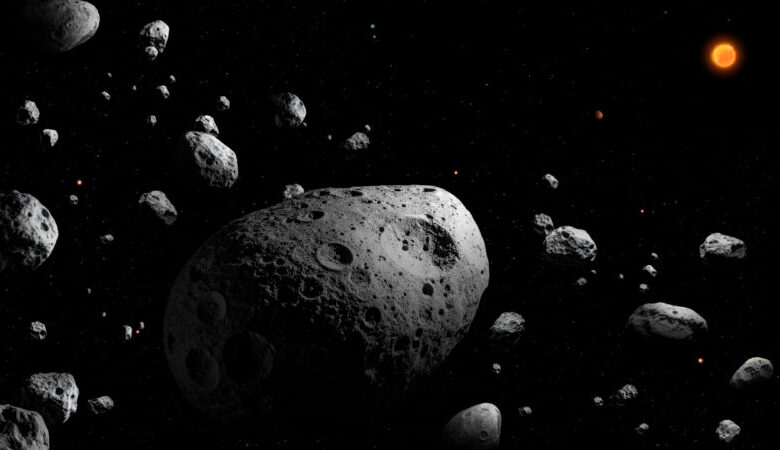
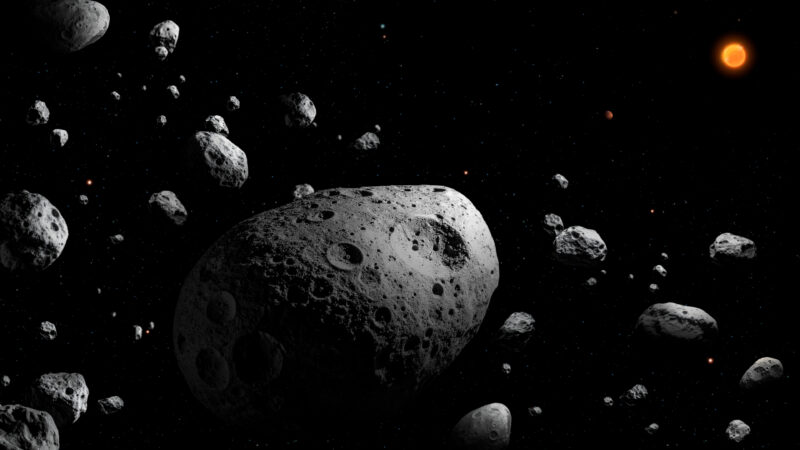
The Vera C. Rubin Observatory has just discovered a “never before seen” fast-spinning asteroid. It sets a new speed standard for solar system objects larger than .5 kilometer (0.3 miles). NOIRLab said on January 7, 2026, that the asteroid – named 2025 MN45 – measures a whopping 710 meters (0.44 miles) and makes a full rotation every 1.88 minutes!
The whirling rocky body is one of 1,900 new solar system objects discovered during Rubin’s First Look Event in spring 2025. Among the freshly found minor planets were 19 super- and ultra-fast-rotating asteroids. 2025 MN45 lies in the main asteroid belt.
The Astrophysical Journal Letters published the peer-reviewed study on January 7, 2026.
Fast-spinning asteroid made of very strong stuff
Most main-belt asteroids are assemblages of small rocks loosely held together by gravity. That means if they spin too quickly, they fly apart. Because fast-spinning 2025 MN45 makes one rotation in less than two minutes, it must be extremely solid. NOIRLab’s press release said:
For objects in the main asteroid belt, the fast-rotation limit to avoid being fragmented is 2.2 hours; asteroids spinning faster than this must be structurally strong to remain intact. The faster an asteroid spins above this limit, and the larger its size, the stronger the material it must be made from.
The other recently discovered fast-spinning objects must also be made of quite stern stuff. The 16 super-fast rotators have periods of between 13 minutes and 2.2 hours. The three ultra-fast rotators – including 2025 MN45 – all complete a rotation in less than 5 minutes.
Sarah Greenstreet, NOIRLab assistant astronomer and lead of Rubin Observatory’s Solar System Science Collaboration’s Near-Earth Objects and Interstellar Objects working group, described the composition of such a fast-spinning asteroid as unusual:
We calculate that it would need a cohesive strength similar to that of solid rock. This is somewhat surprising since most asteroids are believed to be what we call ‘rubble pile’ asteroids, which means they are made of many, many small pieces of rock and debris that coalesced under gravity during solar system formation or subsequent collisions.
Watch EarthSky’s Dave Adalian discuss the world’s most powerful camera inside the Vera C. Rubin Telescope with Steven Bellavia.
1,900 asteroids discovered in about 10 hours
NOIRLab, which operates the world’s largest digital camera at the Rubin Observatory, tested the equipment during a commissioning phase in spring of 2025. The results of that brief first-light observation – approximately 10 hours of observing over seven nights in April and May – yielded a treasure trove of solar system objects.
It also yielded the first study based on data from the Rubin Observatory. The paper presents reliable rotation periods for 76 asteroids, including the 16 super- and three ultra-fast rotating objects. All 19 objects are longer than 90 meters (300 feet). And 2025 MN45 is the largest of those.

Rubin can see distant asteroids more clearly
The majority of previously documented fast-spinning asteroids are near-Earth objects (NEOs). This, however, was mainly because the distance to the main asteroid belt made them difficult to observe from Earth. According to NOIRLab’s Greenstreet, the Rubin’s oversize camera has significantly extended humanity’s reach:
As this study demonstrates, even in early commissioning, Rubin is successfully allowing us to study a population of relatively small, very-rapidly-rotating main-belt asteroids that hadn’t been reachable before.
Only one of the newly discovered fast-spinning asteroids is an NEO. The rest lie between the orbits of Mars and Jupiter, as far away as the outside edge of the main asteroid belt. Besides 2025 MN45, other fast-spinning asteroids of note described are 2025 MJ71 (1.9-minute rotation period), 2025 MK41 (3.8-minute rotation period), 2025 MV71 (13-minute rotation period) and 2025 MG56 (16-minute rotation period).
Scientists expect many more fast-spinning asteroid discoveries once Rubin begins its decade-long Legacy Survey of Space and Time. That ambitious project aims to take hundreds of high-resolution images every night of the Southern Hemisphere sky. The data collected should lead future study of the makeup and formation history of fast-spinning asteroids.
Bottom line: 2025 MN45 – a newly discovered, fast-spinning asteroid – is the fastest-rotating object of its size scientists have yet discovered. It rotates once every 1.88 minutes.
Read more: See the first Rubin Observatory images here!
Discover more from GTFyi.com
Subscribe to get the latest posts sent to your email.