
The full moon in February, often referred to as the “Snow Moon,” is a captivating celestial event that will light up the night sky in early February 2026. This moon holds special significance for stargazers and those fascinated by the mysteries of the cosmos. In this article, we’ll explore when and where to see the Snow Moon, its cultural importance, and expert tips for viewing and photographing the event. Based on information from Space.com, this guide will ensure you don’t miss this spectacular astronomical phenomenon.
When and Where to See the Snow Moon
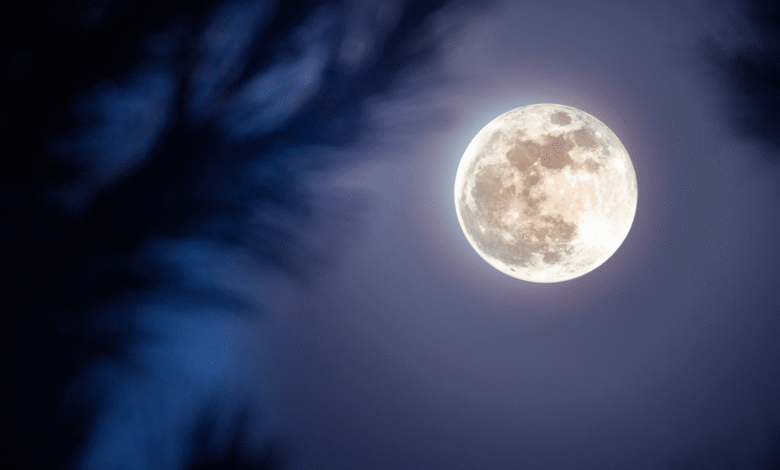
The Snow Moon of February 2026 will reach its peak illumination at 5:09 p.m. EST (2209 GMT) on February 1, 2026. At this moment, the moon will be positioned opposite the sun in Earth’s sky, appearing fully illuminated from our vantage point. According to Space.com, the best time to catch a glimpse of this lunar beauty is just after sunset on February 1, when it will rise in the east, near the stars of the Cancer constellation. This sight will be magnified by a phenomenon known as the “moon illusion,” where the moon appears larger near the horizon, thanks to its proximity to foreground objects.
Those in the Northern Hemisphere will have a particularly favorable view, as the moon will shine brightly across the evening sky. Depending on your location, you’ll also notice a slight yellow or orange tint to the moon. This occurs because the moon’s light travels through Earth’s atmosphere, scattering shorter blue wavelengths and leaving behind the longer red and orange hues.
Understanding the Significance of the Snow Moon
The February full moon is often called the Snow Moon due to the heavy snowfall typical of this time of year in the Northern Hemisphere. Its name serves as a reminder of winter’s cold grip, where snowstorms are frequent and the landscape is often blanketed in white. However, the Snow Moon has also been called the “Hungry Moon,” symbolizing the harshness of winter when food supplies are scarce. For many Indigenous North American tribes, it is known as the “Bear Moon,” marking the period when bear cubs are born.
Beyond its natural beauty, the Snow Moon holds cultural and spiritual importance. In India, it coincides with Guru Ravidas Jayanti, a celebration of the life and teachings of the spiritual leader Guru Ravidas. Guru Ravidas emphasized equality and social justice, and the day is marked by processions and acts of worship. Additionally, the full moon aligns with Magha Purnima, a day of fasting, prayer, and charitable acts among Hindus.
The Moon’s Path and Other Skywatching Events
The Snow Moon is not only about the lunar spectacle; the surrounding sky will also offer a treat for skywatchers. Jupiter will be particularly visible in the evening sky, appearing as a brilliant “evening star” just above the eastern horizon. Look for the bright stars Castor and Pollux in the Gemini constellation, which will shine to the left of Jupiter. If you’re observing on February 1, you’ll also spot the constellation Orion, including its famous red giant star Aldebaran, which marks the eye of the Taurus bull.
For those in parts of North America and Africa, February 2 will offer a unique opportunity to witness the Snow Moon occult Regulus, the brightest star in the Leo constellation. This will happen as the moon passes directly in front of Regulus, briefly hiding it from view.