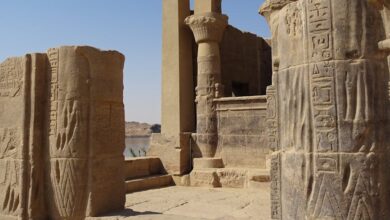
The year 2025 is already being hailed as a watershed moment for archaeology, a period where long-lost secrets, buried for millennia, are being unearthed at an astonishing rate. From the dense jungles of Guatemala to the frozen landscapes of Norway and the sun-scorched sands of Egypt, a torrent of archaeology discoveries of 2025 are challenging our understanding of ancient civilizations, human origins, and the very narrative of our past. Groundbreaking technology, combined with sheer perseverance, is peeling back the layers of time, revealing lost cities, royal tombs, and sunken worlds that were once the stuff of legend. These are not just incremental finds; these are paradigm-shifting revelations that are forcing historians and scientists to rethink what they thought they knew about our ancestors.
This year has seen an unprecedented convergence of cutting-edge science and traditional fieldwork. Advanced remote-sensing technologies like LiDAR (Light Detection and Ranging) are piercing through impenetrable forest canopies to map entire ancient cities, while sophisticated underwater drones are exploring shipwrecks at depths previously unreachable. Simultaneously, new analytical techniques applied to fossils and artifacts are providing astonishingly detailed insights into the daily lives, rituals, and even the genetics of ancient peoples. The latest archaeological finds of 2025 are not just about spectacular treasures; they are about connecting with the human stories etched into the fragments of the past, offering profound lessons for our present and future.
Egypt’s Sands Yield Royal Secrets: The Tombs of Thutmose II and a ‘Wizard Doctor’.
Egypt, a land that has perpetually fueled the world’s imagination, has once again offered up staggering glimpses into its pharaonic past in 2025. One of the most electrifying archaeological breakthroughs of 2025 was the long-awaited confirmation of the original tomb of Pharaoh Thutmose II. While his mummy was found in the 19th century, relocated by ancient priests to protect it from looters, the actual location of his intended burial remained a tantalizing mystery. Early in the year, a team working in the Valley of the Kings, using ground-penetrating radar followed by meticulous excavation, uncovered the tomb.
Though heavily plundered in antiquity, its discovery is monumental. It completes the puzzle of the 18th Dynasty’s royal burials, offering invaluable architectural and inscriptional data that sheds light on a tumultuous period of Egyptian history. The find reinforces our understanding of royal funerary practices and the immense efforts undertaken to secure the pharaohs’ journey into the afterlife.
The Healer of Saqqara: A Tomb of Magic and Medicine.
Adding to the year’s incredible Egyptian saga, a joint French-Swiss mission near the Saqqara necropolis unearthed the richly decorated tomb of a high-status individual named Tetinebefou. Dating to the 5th Dynasty (Old Kingdom), Tetinebefou was not a pharaoh but a figure of immense importance—a healer or “wizard doctor.” His tomb is a treasure trove of information, containing rare depictions of medical instruments and inscriptions detailing his dual role as a priest and a physician. This ancient discovery provides a fascinating window into the intertwined nature of magic, religion, and medicine in ancient Egypt.
- Rare Medical Instruments: The tomb’s reliefs depict objects that are believed to be some of the earliest representations of surgical tools.
- Magical Incantations: Alongside medical scenes are hieroglyphic texts of spells and incantations intended to ward off disease-causing spirits.
- Social Status: The quality and size of the tomb indicate that healers like Tetinebefou held a position of great respect and influence in society, likely tending to the royal court itself.
This discovery challenges the modern separation of science and faith, demonstrating that for the ancient Egyptians, the healing arts were a holistic practice that addressed both the physical and the spiritual realms. It stands as one of the most significant archaeology news items of the year, providing a deeply personal look at health and belief over 4,000 years ago.
Echoes of a Sunken World: Indonesia’s 140,000-Year-Old Submerged Site.
Perhaps the most profound and unexpected archaeology discovery of 2025 came from the seabed off the coast of Indonesia. What began as a routine dredging operation uncovered a submerged prehistoric landscape that is fundamentally altering our understanding of early human migration. Dubbed a “sunken world,” this site, dated to an astonishing 140,000 years ago, has yielded the first underwater hominin fossils ever found in Southeast Asia. Among the thousands of fossils were two skull fragments—a frontal and a parietal bone—bearing a striking resemblance to Homo erectus.
A Lost Continent and its Inhabitants.
This submerged landscape is believed to be physical evidence of the prehistoric continent of Sundaland, a massive landmass that connected modern-day Indonesia, Malaysia, and the Philippines during the Pleistocene epoch when sea levels were much lower. The site paints a vivid picture of a world lost to the waves.
- Mega-fauna Graveyard: Alongside the hominin remains, paleontologists have identified over 6,000 vertebrate fossils, including the bones of giant elephant-like Stegodons, Komodo dragons, deer, and buffalo.
- Evidence of Butchery: Crucially, many of the animal bones show distinct cut marks, clear evidence of deliberate butchery by our ancient relatives. This suggests that the inhabitants of Sundaland were not just scavengers but skilled hunters capable of taking down large prey.
- A Riverine Ecosystem: Geological analysis has traced the outline of a now-buried river system, part of the ancient Solo River, which would have supported a vibrant savanna-like ecosystem teeming with life.
Rewriting the Story of Homo erectus.
This discovery is a game-changer for several reasons. It provides concrete evidence of a thriving Homo erectus population in a region now deep underwater, suggesting that vast areas of their world have been lost and are yet to be discovered. The find indicates that these early humans were more adaptable and geographically widespread than previously thought. The evidence of sophisticated hunting techniques further challenges the outdated notion of Homo erectus as a simple, less-advanced hominin. This fossil find forces us to consider the immense impact of climate change and rising sea levels on the archaeological record and the human story. It raises tantalizing questions: what other evidence of our ancient ancestors lies waiting on the continental shelves, hidden beneath the oceans?
Viking Age Revelations: A Noble Cemetery and a Chieftain’s Boat Burial.
The Viking Age continues to captivate the public, and the archaeology discoveries of 2025 have added rich new chapters to the saga of these seafaring Northmen. In Denmark, a construction project in Lisbjerg led to the extraordinary discovery of a 10th-century Viking cemetery belonging to a noble family. The site, containing around 30 graves, is believed to be associated with a nearby farmstead, likely belonging to earls or stewards who served the legendary king Harald Bluetooth.
The Lady with the Ornate Box.
The centerpiece of this discovery is the grave of an elite woman buried with a rare and exquisitely crafted wooden box.
- Exceptional Craftsmanship: The box, measuring about 12.5 inches square, features a complex locking mechanism, silver-plated brackets, and ornate rivets, showcasing the high level of artistry among Viking artisans. Only two other similar boxes are known to exist.
- Personal Treasures: Inside the box, archaeologists found personal items that offer a poignant connection to this high-status woman: pearls, a ribbon woven with gold thread, and a pair of scissors.
- Global Connections: The presence of coins and beads from distant lands within the other graves highlights the extensive trade networks and far-reaching influence of the Viking world.
This Viking discovery provides a nuanced view of their society, moving beyond the stereotype of fierce warriors to reveal a world of powerful noble families, sophisticated craftsmanship, and extensive international connections.
Sailing into the Afterlife on Senja.
Meanwhile, in Norway, a Viking-Era boat burial uncovered on the island of Senja has provided more insights into their funerary rituals. While not as lavish as some of the famous ship burials, this find is significant for its completeness and the story it tells. The burial of an individual within a boat, surrounded by grave goods, was a high-status honor, symbolizing a safe journey to the afterlife. Analysis of the remains and artifacts is ongoing, but it promises to reveal more about the social hierarchy and belief systems of the Vikings who inhabited this remote northern island. These finds demonstrate that even a millennium later, the Vikings still have many stories to tell.
Mesoamerica’s Shifting Power Dynamics: A Teotihuacan Altar in a Maya City.
The ancient civilizations of Mesoamerica were a complex tapestry of cultures, alliances, and conflicts. A stunning 2025 discovery at the heart of the great Maya city of Tikal in Guatemala has cast a brilliant new light on a pivotal moment in its history. An international team of archaeologists unearthed a painted altar that is not Maya in style but is instead characteristic of the powerful culture of Teotihuacan, a metropolis over 600 miles away in central Mexico.
An Occupier’s Imprint.
The altar, dating to the late 4th century AD, is a powerful piece of evidence in a long-running debate about the relationship between these two ancient superpowers. For years, scholars have suspected that the influence of Teotihuacan on Tikal was less a friendly cultural exchange and more of a hostile takeover.
- Foreign Artistry: The altar’s four painted panels depict a deity known as the “Storm God,” a central figure in Teotihuacan’s pantheon. Researchers argue that the artwork was created not by a local Maya artist but by a highly skilled artisan trained in the Teotihuacan tradition.
- A Puppet King: This find corroborates textual evidence found decades ago suggesting that in 378 AD, Teotihuacan orchestrated a coup at Tikal, removing its king and installing a new ruler loyal to them.
- A Citadel in Miniature: The discovery of the altar builds on previous LiDAR surveys that revealed a scaled-down replica of Teotihuacan’s main citadel hidden under hills just outside Tikal’s center, suggesting a period of occupation or surveillance.
- Unusual Burial Practices: Further cementing the foreign influence, archaeologists found a child buried in a seated position inside the altar—a practice rare at Tikal but common at Teotihuacan.
This Mayan discovery is a stark reminder that the ancient world was just as politically complex and turbulent as our own. It shows a powerful empire extending its influence deep into foreign territory, leaving an indelible mark that can still be read in the archaeological record nearly 1,700 years later. It is a testament to how new archaeological finds can dramatically confirm or reshape historical narratives.
The Future of the Past: How Technology is Shaping Archaeological Discoveries in 2025 and Beyond.
The incredible discoveries of 2025 would have been impossible just a few decades ago. Technology is the silent partner in nearly every modern excavation, accelerating the pace of discovery and deepening our ability to interpret the past.
- AI in Archaeology: Artificial intelligence is being trained to analyze vast datasets of satellite imagery and LiDAR scans to predict the locations of undiscovered sites, a task that would take humans lifetimes to complete.
- Ancient DNA (aDNA): The study of aDNA is revolutionizing our understanding of human history. By extracting genetic material from ancient bones and teeth, scientists can trace migration patterns, identify family relationships in cemeteries, and even study the evolution of ancient diseases.
- Geophysical Surveys: Non-invasive techniques like ground-penetrating radar (GPR) and magnetometry allow archaeologists to “see” beneath the ground without digging, mapping buried structures like walls, tombs, and roads, thus allowing for more precise and less destructive excavations.
- Digital Reconstruction: 3D modeling and virtual reality are being used to create stunningly accurate reconstructions of ancient sites and artifacts, allowing researchers and the public to experience the past in immersive new ways.
These tools are not replacing the traditional archaeologist’s trowel but are augmenting it, creating a powerful synergy between human expertise and computational power. The archaeological breakthroughs of 2025 are a clear sign that we are entering a new golden age of discovery, where the next great find might be revealed not just by a shovel, but by an algorithm.
Frequently Asked Questions (FAQ) about the Latest Archaeology Discoveries.
What is the biggest archaeological discovery of 2025 so far?
While there have been many incredible finds, the discovery of the 140,000-year-old submerged Homo erectus site in Indonesia is arguably the most significant. It has the potential to fundamentally rewrite our understanding of early human evolution, migration, and the impact of ancient climate change.
How do archaeologists know where to dig?
Archaeologists use a variety of methods to find new sites. These include historical research (studying ancient texts and maps), remote sensing (using satellite imagery and LiDAR to spot anomalies on the landscape), geophysical surveys (using GPR to look underground), and sometimes, accidental discoveries made during construction or farming.
What new technology is having the most impact on archaeology?
LiDAR has been a revolutionary tool, especially in forested areas like Mesoamerica, where it can digitally remove the tree canopy to reveal entire ancient cities. Additionally, the rapidly advancing field of ancient DNA (aDNA) analysis is providing unprecedented insights into the genetics and relationships of past populations.
Can I volunteer on an archaeological dig?
Yes, many universities and archaeological organizations offer field schools and volunteer opportunities. These programs allow members of the public to participate in real excavations under professional supervision. It’s a fantastic way to gain hands-on experience and contribute to archaeological research.
What happens to artifacts after they are excavated?
After artifacts are carefully excavated and recorded, they are taken to a laboratory for cleaning, conservation, and analysis. They are studied by specialists to learn as much as possible about them. Ultimately, significant finds are often put on display in museums for the public to see and learn from, while the rest are carefully stored in research collections.
Conclusion: A Year of Unprecedented Discovery and Endless Possibility.
The year 2025 has firmly established itself as a landmark period for archaeological exploration. The discoveries are not isolated curiosities but are interconnected threads in the vast and intricate tapestry of human history. From the medical practices of ancient Egypt to the imperial ambitions of Teotihuacan, from the intimate family life of the Vikings to the vast, lost world of our Homo erectus cousins, these finds bring the past to life with breathtaking clarity. They demonstrate that history is not a static, finished story but a dynamic and ever-evolving field of inquiry.
As technology continues to advance and new sites are explored, we stand on the precipice of even greater revelations. The archaeology discoveries of 2025 are a powerful reminder that there are still countless secrets buried beneath our feet, waiting for the right moment and the right tools to be revealed. The ground is a library, and this year, we have been privileged to read some of its most astonishing and long-hidden volumes. The quest to understand our shared past continues, promising a future rich with discovery.
Valuable References.
To ensure the authenticity of this article and provide avenues for further reading, the following resources are recommended. These organizations and publications are at the forefront of archaeological research and reporting.
- Archaeological Institute of America (AIA)
- HeritageDaily
- Antiquity Journal
- Live Science – Archaeology
- National Geographic – History & Culture
Disclaimer: The information provided in this article is for general informational purposes only. It is compiled from news reports, scientific journals, and press releases related to archaeological discoveries in 2025. While we strive to present accurate and up-to-date information, the field of archaeology is dynamic, and interpretations of findings can evolve with further research. The details presented here should not be considered definitive scholarly conclusions. Readers are encouraged to consult primary research and official publications for in-depth study.
Discover more from GTFyi.com
Subscribe to get the latest posts sent to your email.