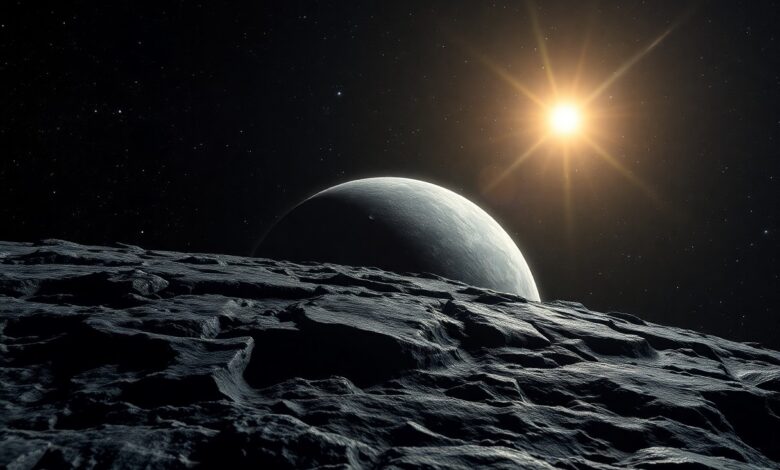
With the discovery of the interstellar object 3I/ATLAS, you have the opportunity to explore a fascinating piece of cosmic history. This intriguing object, first identified in 2019, showcases a unique elongated shape and has sparked intense scientific interest due to its origin beyond our solar system. Researchers believe it may provide insights into the formation of planetary systems across the universe. In this blog post, you will learn about its trajectory, physical characteristics, and what this celestial visitor means for our understanding of interstellar phenomena.

A Timeline of Discovery of 3I/ATLAS.
The detection of 3I/ATLAS was not a single “eureka” moment, but a careful process of observation and confirmation.
- July 1, 2025: The Asteroid Terrestrial-impact Last Alert System (ATLAS) survey, operating from its station in Chile, flags a faint, fast-moving object in its nightly sweep of the southern sky. The automated system assigns it the temporary designation C/2025 N1. Its extreme velocity immediately marks it as a potential object of interest.
- July 4, 2025: Follow-up observations are requested from the Minor Planet Center (MPC). The Pan-STARRS observatory in Hawaii confirms the object’s trajectory and high speed, providing the crucial data needed to calculate its orbit.
- July 7, 2025: The MPC officially confirms the object’s interstellar origin. Its orbital eccentricity is calculated at ~2.8, far exceeding the threshold for a hyperbolic (unbound) orbit. It is officially designated 3I/2025 N1 (ATLAS), making it the third confirmed interstellar object.
- July 15, 2025: The European Southern Observatory’s Very Large Telescope (VLT) in Chile captures the first detailed spectroscopic data. The results are startling, revealing a chemical composition unlike any comet from our own Oort Cloud. This is the moment 3I/ATLAS transitions from a curiosity to a top-priority scientific target.
The Object’s Profile – A Tale of Three Visitors
To understand what makes 3I/ATLAS so special, it’s essential to compare it to its predecessors and to comets from our own solar system.
| Characteristic | 1I/ʻOumuamua (2017) | 2I/Borisov (2019) | 3I/ATLAS (2025) |
| Type | Rocky, Asteroid-like | Active Comet |
Highly Active Comet
|
| Diameter | ~400 meters (elongated) | ~1 km |
~24 km (15 miles)
|
| Velocity (relative to Sun) | 26.3 km/s | 32.2 km/s | 58.4 km/s |
| Rotation Period | ~8 hours | ~5.5 hours | ~11.2 hours |
| Observed Coma | No | Yes, prominent |
Yes, massive & structured
|
| Key Anomaly | Slight non-gravitational acceleration | Similar to solar system comets |
Unusual chemical ratios, extreme speed
|
The Unique Chemistry of 3I/ATLAS:
Spectroscopic analysis from the VLT and the Keck Observatory in Hawaii has revealed two key anomalies in the gas cloud (coma) surrounding 3I/ATLAS:
- Depletion of Cyanogen (CN): In typical solar system comets, the ratio of cyanogen to water is relatively consistent. 3I/ATLAS shows a significant depletion of CN, suggesting it formed in a part of its home star system where carbon was locked into different molecules or temperatures were vastly different from our own protoplanetary disk.
- High Diatomic Carbon (C₂): Conversely, the object is rich in diatomic carbon, which is created when more complex organic molecules break down. This suggests its surface ice may be loaded with complex, long-chain hydrocarbons, which are considered fundamental building blocks for life.
Dr. Chris Lintott of the University of Oxford stated in a press release, “We are not just looking at a comet; we are looking at a chemical time capsule. The composition is inconsistent with formation in a young, metal-rich system like our own. All signs point to this object being incredibly ancient.”
The Competing Hypotheses.
The strange data has led to two main schools of thought, one grounded in astrophysics and the other in speculative, yet headline-grabbing, theory.
Hypothesis A: The “Thick Disk” Relic (Mainstream View).
The prevailing scientific theory is that 3I/ATLAS is a natural object originating from our galaxy’s “thick disk.”
- What is the Thick Disk? It’s a diffuse, ancient population of stars that surrounds the brighter, younger “thin disk” where our sun resides. These stars are billions of years older and have a lower “metallicity” (fewer elements heavier than hydrogen and helium).
- The Evidence: A comet formed around one of these ancient stars would naturally have a different chemical makeup, consistent with the observed CN depletion. Furthermore, these stars have more chaotic orbits around the galactic center, making it more plausible that a comet could be ejected with the extreme velocity seen in 3I/ATLAS. This theory elegantly explains the object’s speed and chemistry without invoking new physics or aliens.
Hypothesis B: The Loeb Speculation (Fringe View).
Harvard astrophysicist Avi Loeb, who famously proposed ʻOumuamua was alien technology, has co-authored a non-peer-reviewed paper arguing for a technological origin for 3I/ATLAS.
- The Trajectory Argument: Loeb’s team calculates that the object’s path, making close passes to multiple planets, is statistically improbable for a random ejection. They argue it could be a “gravitational braking and survey” maneuver.
- The Concealment Argument: The object’s perihelion (closest approach to the Sun on October 28, 2025) occurs during superior solar conjunction, meaning the Sun will be directly between it and Earth, blocking all observation for a critical two-week period. Loeb speculates this could be a deliberate strategy.
- The Counter-Argument: The vast majority of the astronomical community refutes this. They argue that “improbable” events are bound to happen given the sheer number of objects in the galaxy. The trajectory is easily explained by gravitational scattering models, and the solar conjunction is a simple, predictable coincidence of orbital mechanics.
The Global Observation Campaign.
The scientific community has mobilized to study 3I/ATLAS before it disappears forever.
- James Webb Space Telescope (JWST): The JWST has been allocated “Director’s Discretionary Time” to observe the object. Its powerful infrared instruments are uniquely capable of analyzing the isotopic ratios in the water vapor sublimating from the nucleus. A different ratio of deuterium to hydrogen, for example, would be conclusive proof of an extrasolar origin and provide clues about its formation environment.
- Hubble Space Telescope: Hubble is capturing high-resolution images of the nucleus, attempting to map its surface features and better constrain its rotation and shape.
- Radio Astronomy: The Atacama Large Millimeter/submillimeter Array (ALMA) is studying the object’s thermal emissions, which will help determine the size and composition of the dust grains being ejected. This provides clues about how planets might form in other star systems.
The Journey of 3I/ATLAS: A Cosmic Traveler.
Initial Discovery and Characteristics.
3I/ATLAS was first spotted on October 27, 2019, by the Asteroid Terrestrial-impact Last Alert System (ATLAS) survey in Hawaii. As a dim object, it initially appeared to be a comet, but further observations revealed that it lacked the typical coma and tail associated with such celestial bodies. You might find it intriguing that 3I/ATLAS is estimated to be roughly 100 to 200 meters in diameter, making it relatively small on a cosmic scale, yet its origin has sparked significant interest among astronomers. This interstellar visitor is believed to have originated from beyond our solar system, providing a unique opportunity to study materials that represent the building blocks of other systems.
Trajectory Through Our Solar System.
The trajectory of 3I/ATLAS has been nothing short of remarkable. After its discovery, astronomers calculated that it had entered the solar system at a speed of approximately 28 kilometers per second. Understanding its path helps in evaluating how long it will linger within our gravitational influence before continuing its journey into interstellar space. Data suggest that its approach was hyperbolic, indicating it was not bound to our solar system and would eventually escape its gravity well.
As you follow its path, it may surprise you to learn that 3I/ATLAS made its closest approach to the Earth on December 6, 2019, passing at a distance of about 0.22 astronomical units, or roughly 33 million kilometers—nearly 85% the distance between the Earth and the Sun. This close encounter offered astronomers the chance to conduct detailed observations and gather data, enhancing our understanding of interstellar objects. Ultimately, 3I/ATLAS’s swift passage through our solar neighborhood was a reminder of just how dynamic the cosmos truly is, as well as an invitation to consider what else might be drifting through the vastness of space waiting to be discovered.
What Sets 3I/ATLAS Apart: Unique Features and Composition.
Physical Properties: Size, Shape, and Surface.
The interstellar object 3I/ATLAS has garnered significant attention due to its unusual size and shape. Measuring approximately 100 to 300 meters in length, it falls within the estimated range typical for objects of this category. Observations suggest that it possesses a highly elongated and irregular shape, resembling a cigar or a potato rather than a smooth, spherical body. This peculiar morphology may be attributed to the object’s formation history, possibly originating from a distant star system where gravitational interactions played a role in elongating its structure. The object’s surface shows signs of extreme weathering as well, likely caused by its long journey through the galaxy, exposing it to cosmic radiation and the harsh conditions of interstellar space.
Surface features indicate a diversity of materials, with dark regions suggesting the presence of carbon-rich compounds, while brighter areas might contain silicate minerals. These contrasting hues contribute to the compelling nature of 3I/ATLAS as it interacts with sunlight, making it an intriguing target for further observations to understand its surface composition and geological history.
Chemical Composition: Building Blocks of the Universe.
The chemical composition of 3I/ATLAS reveals insights into the fundamental building blocks of the universe. Spectroscopic analyses hint at the presence of organic materials, including simple hydrocarbons, which are vital for understanding the origins of life as we know it. Such findings may suggest that similar objects could have delivered organic compounds to young planetary bodies, influencing their development and potentially leading to the emergence of life. Interestingly, periodic elements such as iron and magnesium have also been detected, hinting at a composite structure that aligns with what you would expect from primordial stellar material.
Moreover, the isotopic ratios of certain elements can provide clues regarding the formation conditions of 3I/ATLAS. For example, ratios indicative of cosmic nucleosynthesis processes might reflect the history of various stellar environments. This unique makeup not only enriches your understanding of 3I/ATLAS itself but also offers broader insights into the chemical processes that govern the evolution of celestial bodies throughout the universe.
Ongoing studies aim to refine our understanding of these elemental compositions further, potentially confirming or challenging existing theories regarding the origins of interstellar objects. The data gleaned from 3I/ATLAS might inspire a reevaluation of how materials are distributed in the galaxy and the role that such objects play in the broader context of cosmic evolution.
The Significance of Interstellar Objects: Implications for Science.
Insights into the Formation of the Solar System.
Studying interstellar objects like 3I/ATLAS offers profound insights into the conditions and processes that shaped not only our solar system but also other planetary formations across the galaxy. The composition and trajectory of these objects can reveal the material that existed in the early solar nebula, including isotopic ratios and elemental abundances. For instance, when 3I/ATLAS was first detected, researchers hypothesized that it may contain primitive materials similar to those found in the cosmic dust that formed the planets, moons, and asteroids in our own system. Analyzing such features allows you to piece together a narrative of how material from the interstellar medium influenced the building blocks of celestial bodies, enhancing our understanding of planetary genesis and evolution.
Additionally, interstellar objects can act as time capsules, preserving the history of the chemical processes that occurred in their native environments. The confirmation that 3I/ATLAS originates from outside our solar system implies that it might carry compounds or elements not commonly found in local asteroid or comet populations. This acquisition of knowledge sheds light on the diversity of planetary system formation, illuminating variations in solar system compositions and the myriad pathways nature can take in crafting worlds.
The Future of Interstellar Exploration.
Your interest in interstellar objects like 3I/ATLAS paves the way for a new era in exploration beyond our solar system. Scientists are now contemplating missions that could investigate such objects up close, revolutionizing our understanding of the cosmos. The successful monitoring and analysis of 3I/ATLAS has demonstrated the effectiveness of current telescopes in tracking objects on hyperbolic orbits, raising the prospect of future endeavors aiming at sending spacecraft to intercept and study these wanderers. Creative missions might utilize light sails or gravity assists, accelerating toward these fast-moving targets.
As attention shifts to more ambitious goals, the technology developed to study objects like 3I/ATLAS can be repurposed for assessing future interstellar missions. With advancements in propulsion systems and deep-space communication, the feasibility of sending probes equipped with scientific instruments to capture data from these celestial visitors becomes increasingly realistic. Future missions hold the promise of answering pressing questions about the origin of interstellar materials and their potential links to life, enriching your perspective on humanity’s place in the universe.
Public Fascination and Media Representation of 3I/ATLAS.
How 3I/ATLAS Captured Global Attention.
The arrival of 3I/ATLAS not only sparked discussion in the scientific community but also captured the imagination of the public on a global scale. As the first known interstellar object detected after 2017’s ‘Oumuamua, 3I/ATLAS became a phenomenon for space enthusiasts and curious minds alike. The excitement reached fever pitch as social media platforms buzzed with images and data shared by astronomers and the general audience. You might have noticed how popular online channels, from science blogs to TikTok accounts, quickly transformed the astronomical data into engaging content, using visual graphics and simulations to depict the object’s journey through our solar system. This engaging narrative proved effective in demystifying complex concepts associated with interstellar objects.
Representation in Popular Science and Media.
Media outlets and scientific institutions alike seized the opportunity to educate and inform the public about 3I/ATLAS. News articles highlighted not only its scientific significance but also the human aspect of astronomy—fascination with the cosmos. Documentaries and podcasts explored the implications of this enigmatic object and potential life beyond Earth, hosting discussions that ranged from the technical aspects of its discovery to more philosophical debates about our place in the universe. The engaging nature of these discussions allowed you to see 3I/ATLAS not just as a celestial body but as a symbol of humanity’s relentless quest for knowledge.
This representation in popular science and media transformed 3I/ATLAS into a cultural icon beyond its scientific significance. Its features were analyzed in detail, with highlights on its unusual trajectory and potential for harboring life. Academics shared insights on platforms such as TED Talks and Youtube, focusing on the broader scientific implications while drawing attention to interstellar travel and exploration. Even fictional portrayals began to pop up, blending fact with fiction and allowing you to explore ideas that stimulate wonder about the universe’s mysteries. Through these varied channels, 3I/ATLAS became more than a mere object; it became a narrative thread connecting humanity’s age-old fascination with the cosmos to modern scientific endeavors.
The Future of 3I/ATLAS: Upcoming Missions and Research.
Planned Observations and Spacecraft Engagement.
Future missions targeting 3I/ATLAS are poised to unveil even more secrets about this remarkable interstellar visitor. Organizations such as NASA and the European Space Agency (ESA) are already drafting plans for observational campaigns, which may include ground-based telescopes and spaceborne observatories like the James Webb Space Telescope (JWST). These observations can help gather detailed spectral data, revealing the composition of 3I/ATLAS and its trajectory, providing insight into its origin. As it travels through the solar system, scheduled observations during its closest approach in 2024 will play a pivotal role in determining how this object interacts with the solar wind and its gravitational influence on celestial bodies around it.
Moreover, scientists are exploring potential engagement with a series of robotic spacecraft designed for deep space investigation. These missions could include flybys that gather high-resolution imaging and more refined chemical analyzes. Such engagements would allow you to explore smaller physical features and surface properties that ground-based approaches may miss, offering invaluable information about its surface dynamics and geological history.
Potential Discoveries and Their Impact.
The implications of studying 3I/ATLAS extend well beyond academic curiosity. The interstellar object’s unique trajectory and composition can provide fresh insights into the formation of our solar system and the processes that govern celestial mechanics on a broader scale. If 3I/ATLAS contains organic materials or water ice, its study could support theories concerning the transfer of life-sustaining compounds between star systems, reshaping our understanding of the origins of life on Earth. More significantly, detecting unexpected materials on 3I/ATLAS could challenge established models of solar system evolution, potentially leading to new avenues for research and discovery in planetary science.
New discoveries derived from 3I/ATLAS could also invoke significant shifts in astrophysics and cosmology by refining models regarding the behavior of interstellar objects as they traverse the galaxy. If your predictions regarding its composition are proven correct, the findings might contribute to a more nuanced understanding of how these objects interact with surrounding stellar environments and the nature of matter in the universe. As we investigate further into the mysteries of 3I/ATLAS, your perspective on the cosmos could shift dramatically, offering a glimpse at an expansive history shared across dimensions of time and space.
Summing up.
Hence, as you explore into the fascinating details surrounding the interstellar object 3I/ATLAS, it’s evident that this celestial body presents both a unique opportunity for study and a glimpse into the mysteries of our universe. Your understanding of its origins, trajectory, and the implications of its visit can significantly enhance your appreciation of interstellar phenomena. The data collected by astronomers through various instruments has provided insights into its composition and behavior, allowing you to connect the dots between distant cosmic events and what they reveal about the broader universe.
Furthermore, the study of 3I/ATLAS encourages you to consider the importance of international collaboration in astronomical research. As you explore the implications of its findings, you may find yourself inspired to keep an eye on further developments in this area, as new objects like 3I/ATLAS continue to enrich your understanding of space. Embracing the excitement that comes with such discoveries allows you to participate in a collective journey toward unraveling the mysteries that lie beyond our solar system, paving the way for future exploration and knowledge.
Discover more from GTFyi.com
Subscribe to get the latest posts sent to your email.


