The Enigma of La Cueva del Tesoro: Inside the Scientific Quest to Explain Spain’s Unexplained Cave Structures

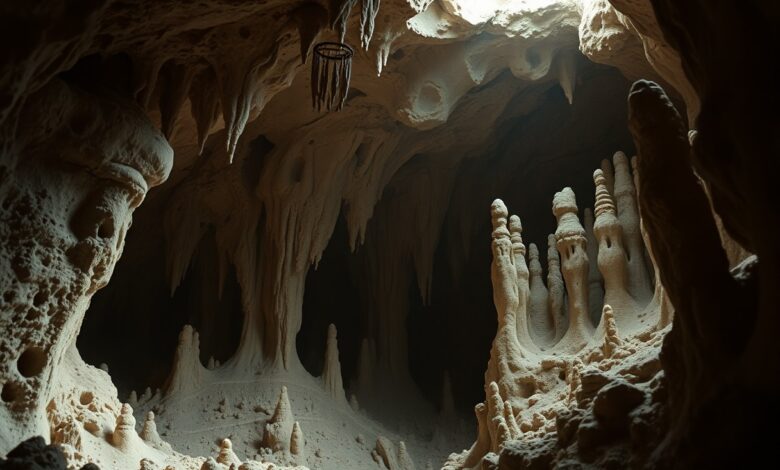
Deep within the limestone hills of Andalusia, near the sun-drenched coast of Malaga, lies a profound mystery that challenges our understanding of both natural processes and ancient history. La Cueva del Tesoro, “The Cave of Treasure,” is known for its dramatic sea-carved chambers and legends of hidden Almoravid gold. However, its greatest treasure may be a scientific enigma: a series of bizarre and complex structures, discovered deep within its passages, that defy simple geological explanation and hint at the possibility of a lost chapter in human history.
A Startling Discovery in the Depths.
The story of this modern mystery began not with a treasure hunter, but with a team of geologists in 1995. During a routine structural survey deep inside the cave system, the team, led by Dr. Marco Ramos, was mapping standard karst formations—the familiar stalactites and stalagmites sculpted by millennia of dripping water. But as they ventured into a lesser-explored passage, they encountered something that stopped them in their tracks.
Instead of the organic, chaotic patterns of nature, they saw structures exhibiting startling regularity. They documented smooth, planar surfaces, precise right-angled junctions, and what appeared to be intentionally carved archways and textured walls. Their instruments, calibrated for natural rock, returned anomalous readings. The initial report was cautious, but the implication was clear: these formations did not conform to known geological processes. This unexpected discovery ignited a firestorm of debate that bridges the disciplines of geology, archaeology, and history.
The Scientific Debate: Natural Anomaly or Ancient Architecture?
The core of the enigma lies in a fundamental question of origin. Scientists are divided into two main camps, each with compelling arguments.
1. The Geological Perspective: An Unprecedented Natural Phenomenon?
Geologists are experts in the strange and beautiful ways rock can be shaped by nature. They argue that the structures could be an extreme and rare example of a known geological process.
- Advanced Karst Formations: The cave is a karst system, formed by the dissolution of soluble rocks like limestone. Some geologists propose the structures are a form of “boxwork” formation or “solutional sculpting” that has occurred under a unique and prolonged set of chemical and hydrological conditions, resulting in unusually geometric shapes.
- Mineralogical Composition: Analysis of the structures reveals a composition largely consistent with the cave’s limestone, but with trace elements and crystalline structures that differ slightly. One hypothesis is that highly localized hydrothermal vents or mineral-rich water flows, now long dormant, could have deposited minerals in a way that created these hard, angular formations.
However, even proponents of geological theories admit that the degree of symmetry and the resemblance to deliberate architecture are, at present, unparalleled in any other known cave system on Earth.
2. The Archaeological Hypothesis: Echoes of a Lost Civilization?
Archaeologists and historians present an even more tantalizing possibility: that these structures are man-made.
- Historical Context: The region of Andalusia has been a crossroads of civilization for millennia. It has been home to Neolithic peoples, Phoenician traders, Romans, Visigoths, and the Moors. Archaeological evidence, including pottery and tools found in the upper chambers, confirms human presence in the cave dating back at least 7,000 years.
Megalithic Traditions: The Iberian Peninsula has a rich history of megalithic construction, such as the dolmens of Antequera, not far from Malaga. It is conceivable that a prehistoric culture used the cave for shelter or ritual and possessed unknown techniques for shaping stone. The structures could have been ceremonial chambers, tombs, or even primitive astronomical observatories aligned with celestial events. The main challenge to this theory is the lack of traditional tool marks and other associated artifacts in the immediate vicinity of the deep-cave structures.
A Global Context: Parallels with Other Ancient Mysteries.
Placing La Cueva del Tesoro in a global context reveals that it is not alone in challenging our preconceived notions of the past.
- Göbekli Tepe, Turkey: Dating back over 11,000 years, this site features massive T-shaped stone pillars carved with intricate animal reliefs. It was built by a society of hunter-gatherers, forcing a complete re-evaluation of the capabilities of pre-agricultural peoples.
- The Nazca Lines, Peru: These enormous geoglyphs, etched into the desert landscape between 500 BCE and 500 CE, are so large they can only be fully appreciated from the air. Their purpose remains a subject of intense debate, raising questions about the worldview and technical skills of their creators.
- Yonaguni Monument, Japan: A massive underwater rock formation off the coast of Japan with immense flat terraces and sharp, right-angled stone blocks. Like in the Spanish cave, the debate rages as to whether it is a natural geological feature or a man-made structure submerged by rising sea levels.
These sites, along with La Cueva del Tesoro, represent “out-of-place artifacts” or structures that push the boundaries of established historical and scientific paradigms.
The Path Forward: Technology, Preservation, and the Search for Answers.
To move beyond speculation, an international, multi-disciplinary research effort is underway, employing cutting-edge technology:
- Non-Invasive Imaging: 3D mapping using LiDAR (Light Detection and Ranging) is creating a precise digital model of the structures, allowing for detailed analysis without physical contact. Ground-Penetrating Radar (GPR) is being used to search for hidden chambers or buried artifacts beneath the cave floor.
- Advanced Material Analysis: Small, ethically sourced samples are undergoing petrographic analysis to minutely detail their mineral and crystalline structure. Isotope analysis may help trace the origin of the water that formed or modified the rock, while Optically Stimulated Luminescence (OSL) dating could determine when sediments near the structures were last exposed to sunlight, providing a potential timeline.
Crucially, this research is balanced with a robust conservation plan. The delicate microclimate of the cave is closely monitored, and access to the sensitive areas is severely restricted to prevent damage from human presence. The goal is to unlock the cave’s secrets while ensuring its preservation for future generations.
Comparisons to similar enigmatic sites worldwide.
When considering other enigmatic sites like the Gobekli Tepe in Turkey or the Nazca Lines in Peru, intriguing parallels emerge. Each location holds secrets that stir the imagination and challenge our understanding of human capabilities. For instance, Gobekli Tepe, dating back over 11,000 years, showcases intricate stone carvings, prompting debates about prehistoric civilization’s technological prowess. Similarly, the Nazca Lines exhibit vast geoglyphs that can only be fully appreciated from the sky, raising questions about the intentions behind their creation.
Comparative Analysis of Enigmatic Sites.
| Site | Key Features |
| Gobekli Tepe | Massive stone pillars, carvings, predating known agriculture |
| Nazca Lines | Geometric shapes and figures only visible from the air, purpose debated |
| Stonehenge | Circular stone arrangement, potential astronomical significance |
| Teotihuacan | Pyramids and complex urban layout, mysterious decline |
Each of these sites sparks curiosity due to their extraordinary alignments with ancient human activity and potentially lost technologies. Your exploration into these similarities cultivates a broader understanding of how civilizations have interacted with their environments, leaving behind legacies that continue to puzzle researchers today. The enduring questions surrounding these locations highlight shared themes in our quest for meaning and understanding through the ages.
Conclusion: A Mystery Written in Stone.
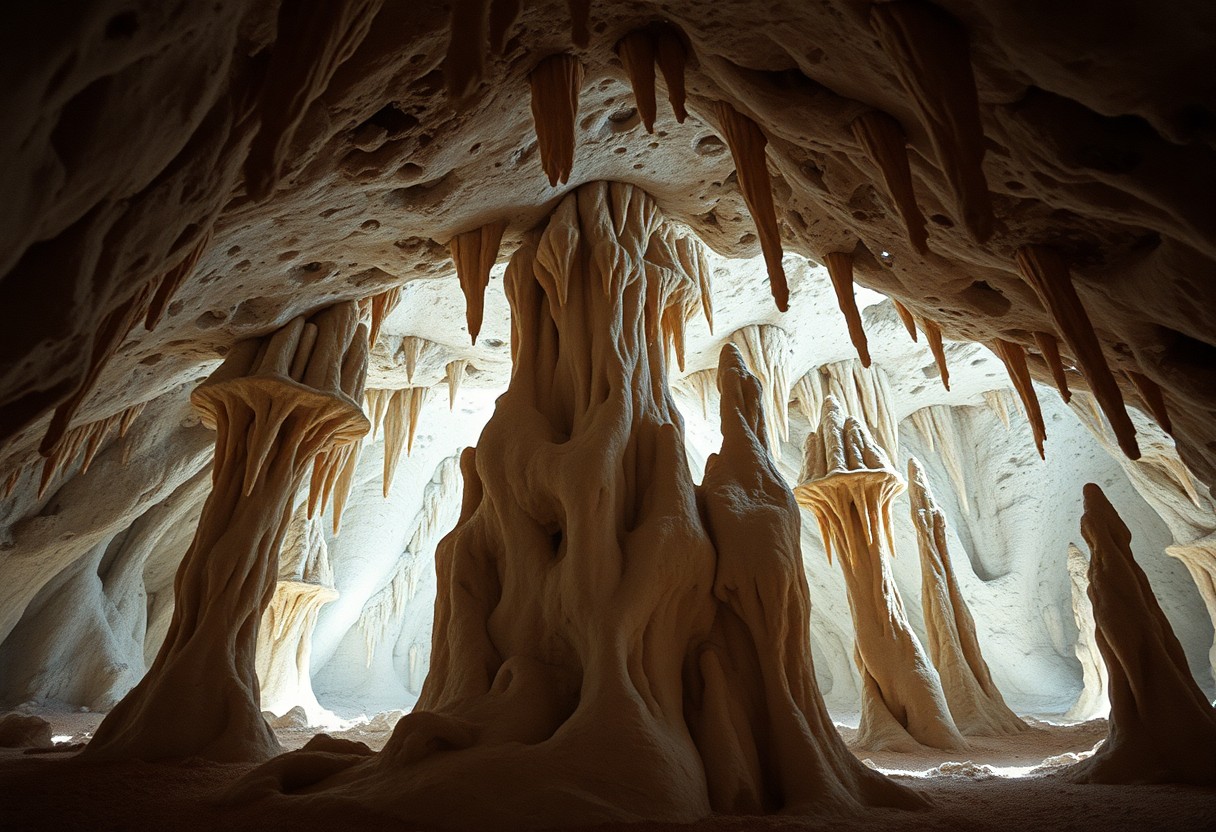
La Cueva del Tesoro remains a profound and captivating enigma. It is a place where the lines between geology and archaeology blur, forcing us to ask fundamental questions about our planet and our past. Are we looking at a geological masterpiece, a freak of nature that mimics design? Or are these structures the silent, stone legacy of a forgotten people with knowledge and skills we are yet to comprehend?
For now, the cave holds its secrets close. But as scientific inquiry continues to peel back the layers of time, we may one day learn the truth of who—or what—created the unexplained structures in the Cave of Treasure.
About the Author
Dr. Elena Vance is a geo-archaeologist with over 15 years of experience studying ancient sites and geological formations. She holds a Ph.D. from the University of Cambridge and has led field expeditions in Iberia and the Near East. Her work focuses on using modern geological techniques to answer ancient historical questions. She has published numerous papers on the intersection of geology and human history and is a leading expert on the archaeological mysteries of the Iberian Peninsula.
Discover more from GTFyi.com
Subscribe to get the latest posts sent to your email.