Underwater Submarine Found Mysterious Ice Structures Beneath Antarctica’s Ice Shelf, Then Disappeared!

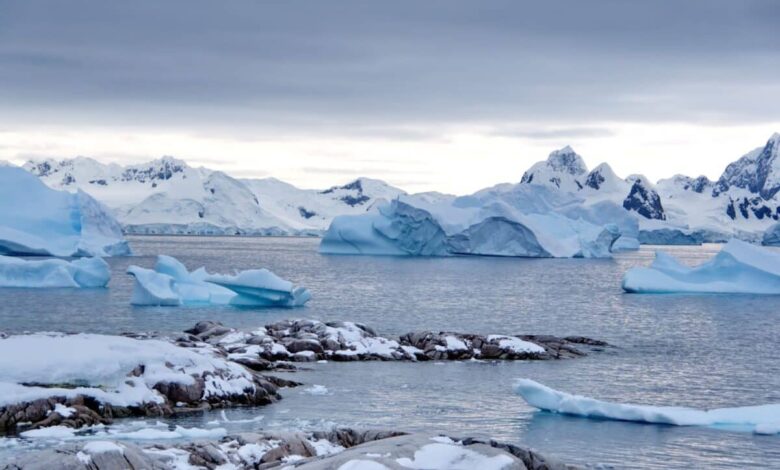
An autonomous submarine exploring the remote waters beneath the Dotson Ice Shelf in Antarctica has discovered strange and previously unseen structures sculpted in the ice. These findings, ranging from terraced plateaus to droplet-shaped pits, could redefine our understanding of the dynamics of ice shelves.
The study presenting these groundbreaking discoveries was published in Science Advances. However, the mission took an unexpected turn when the submarine, named Ran, mysteriously vanished after completing its scans, leaving researchers uncertain about its fate.
Ice Sculptures Beneath the Dotson Shelf
Ran’s mission was to map the underside of the Dotson Ice Shelf, which spans West Antarctica. The team was particularly interested in understanding why the eastern and western sides of the shelf are melting at such different rates. The western side, which is closer to the warming ocean currents, has been thinning rapidly, while the eastern side is much slower to melt.
For nearly a month, Ran mapped 54 square miles of the ice shelf using sonar technology. The submarine‘s findings were striking: it uncovered flat plateaus, terraced steps, and large teardrop-shaped depressions, features that had never been observed before and didn’t appear in satellite images.
According to Anna Wåhlin from the University of Gothenburg, these formations were shaped by the interaction between the ice and meltwater from below. The teardrop-shaped pits, in particular, revealed the power of warm currents that have eroded the ice at different speeds, creating a landscape that had been hidden until now.

How Warm Water is Accelerating Ice Loss
As reported by the study, the team’s research showed that the western side of the Dotson Ice Shelf is more susceptible to rapid melting due to the intrusion of warm Circumpolar Deep Water. In contrast, the eastern side remains relatively stable, protected by colder waters.
According to satellite data, Dotson has been losing about 40 feet of ice thickness annually, a direct result of this warm water intrusion. The newly mapped terrain reveals how the warm water carves different types of features depending on the speed of the currents. Where the water moves slowly, the ice is gradually worn down into terraced steps.

Vanishing Below the Ice: The Mystery of Ran’s Disappearance
The excitement surrounding Ran’s groundbreaking findings was tempered by an unexpected twist: after completing its final scans, the submarine vanished. As Ran had been operating autonomously, there was no way for the team to communicate with the vehicle during its mission.
For over 24 hours, the researchers tried in vain to contact it, but no signals came back. Despite extensive searches, no trace of the submarine was found, and it was presumed lost. Dr. Wåhlin expressed the unease of the team:
“To see Ran disappear into the dark, unknown depths below the ice, executing her tasks for over 24 hours without communication, is of course daunting.”
While the cause of the disappearance remains speculative, ranging from a mechanical failure to a possible collision with ice ridges, the loss doesn’t overshadow the mission’s success. The data that Ran collected during its earlier scans will help shape future research on the melting of Antarctica’s ice shelves and the global implications for sea level rise.

Discover more from GTFyi.com
Subscribe to get the latest posts sent to your email.