The Sun is about 109 times wider than Earth and contains roughly 99.86% of the Solar System’s mass — a dramatic reminder of scale before we even name the planets. Its diameter is roughly 1,392,700 km compared with Earth’s 12,742 km, and the Sun’s enormous output of light and particles drives climate and space weather across the system.
There are exactly five objects larger than earth in our neighborhood: the Sun and the four giant planets — Jupiter, Saturn, Uranus and Neptune. Size matters here because mass and volume control gravity, atmospheric retention, magnetic fields and orbital influence, all of which shape habitability and the behavior of moons, rings and smaller bodies. Below I’ll walk through each giant object, give clear numbers and explain why those differences are scientifically and practically important.
The Sun — a class of its own

The Sun is not just the largest object in the Solar System — it’s a main-sequence star whose mass and energy output create the architecture we see. As a star it’s composed primarily of hydrogen and helium, sustaining nuclear fusion in its core and providing the radiation that defines the habitable zone. Its mass and volume set the gravitational stage for planets, dwarf planets, comets and asteroids to orbit the common center of mass.
1. The Sun — the behemoth that shapes the system
By the numbers, the Sun’s diameter is about 1,392,700 km (≈109× Earth), its volume could contain roughly 1.3 million Earths, and its mass is ≈333,000 times that of Earth. NASA reports the Sun holds about 99.86% of the Solar System’s mass (NASA), which explains its gravitational dominance: planetary orbits, from Mercury to Neptune, are controlled by the Sun’s pull.
The Sun’s influence goes beyond gravity. Solar radiation defines Earth’s climate and supplies the energy for life, while episodic solar storms (coronal mass ejections and flares) drive space weather that can disrupt satellites and power grids. Because the Sun contains nearly all the system’s mass, astronomers compare other bodies to Earth partly to make those gravitational and energetic contrasts clear.
Gas giants — Jupiter and Saturn
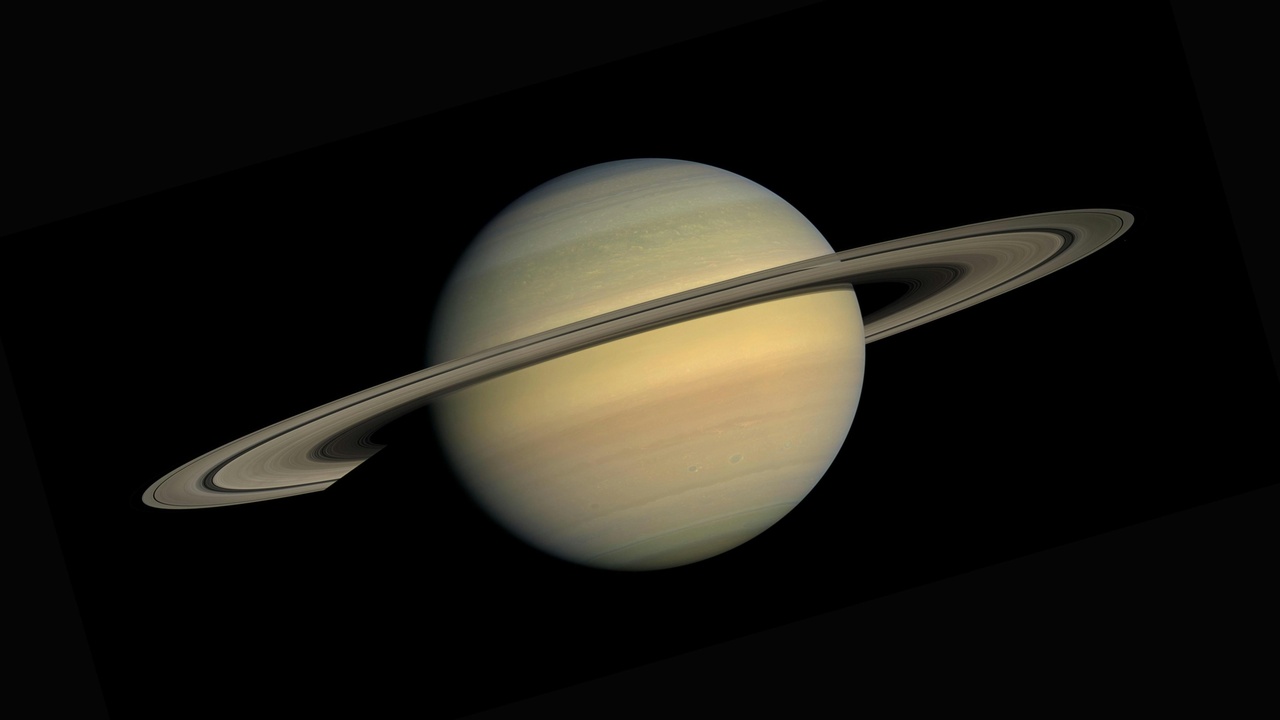
Gas giants are worlds made mostly of hydrogen and helium with no extensive solid surface, and they stand far above terrestrial planets in size and mass. Jupiter and Saturn dominate the outer Solar System’s mass budget after the Sun, exerting strong gravitational effects that shape asteroid orbits, influence comet paths and shepherd ring particles. Both also host large moon systems that are worlds of interest in their own right.
The following subsections cover each gas giant with key stats and why those numbers matter for dynamics, formation and exploration.
2. Jupiter — the largest planet (≈317.8 Earth masses)
Jupiter is the biggest planet in the Solar System and dwarfs Earth in multiple ways. Its equatorial diameter is about 139,820 km (≈11× Earth), its mass is approximately 317.8 Earth masses, and its volume holds roughly 1,321 Earths (NASA/JPL).
Jupiter’s gravity sculpts the asteroid belt and redirects many comets, which is why scientists sometimes describe it as a kind of cosmic shield. The planet’s magnetosphere is enormous, and its persistent weather features include the centuries-old Great Red Spot — a storm observed for at least 400 years. Studying Jupiter (and missions like Juno) helps refine formation models for giant planets, including those we now find around other stars.
Among objects larger than earth, Jupiter’s system also includes four large Galilean moons — Io, Europa, Ganymede and Callisto — each a scientifically valuable world with its own geology and potential for subsurface oceans.
3. Saturn — the ringed giant (≈95.16 Earth masses)
Saturn is the second-largest planet with an equatorial diameter around 116,460 km (≈9.1× Earth), a mass near 95.16 Earth masses and a volume equivalent to roughly 763.6 Earths (NASA).
Saturn’s striking rings are made of ice and rock and act as a laboratory for disk physics; the planet’s average density is less than 1 g/cm³, so it would float in a giant bathtub of water. The Cassini mission (1997–2017) revealed geysers on the moon Enceladus, complex seasonal behavior in the rings and intricate moon-ring interactions (Cassini archive), all of which were made possible because Saturn is so much larger than Earth.
Ice giants — Uranus and Neptune
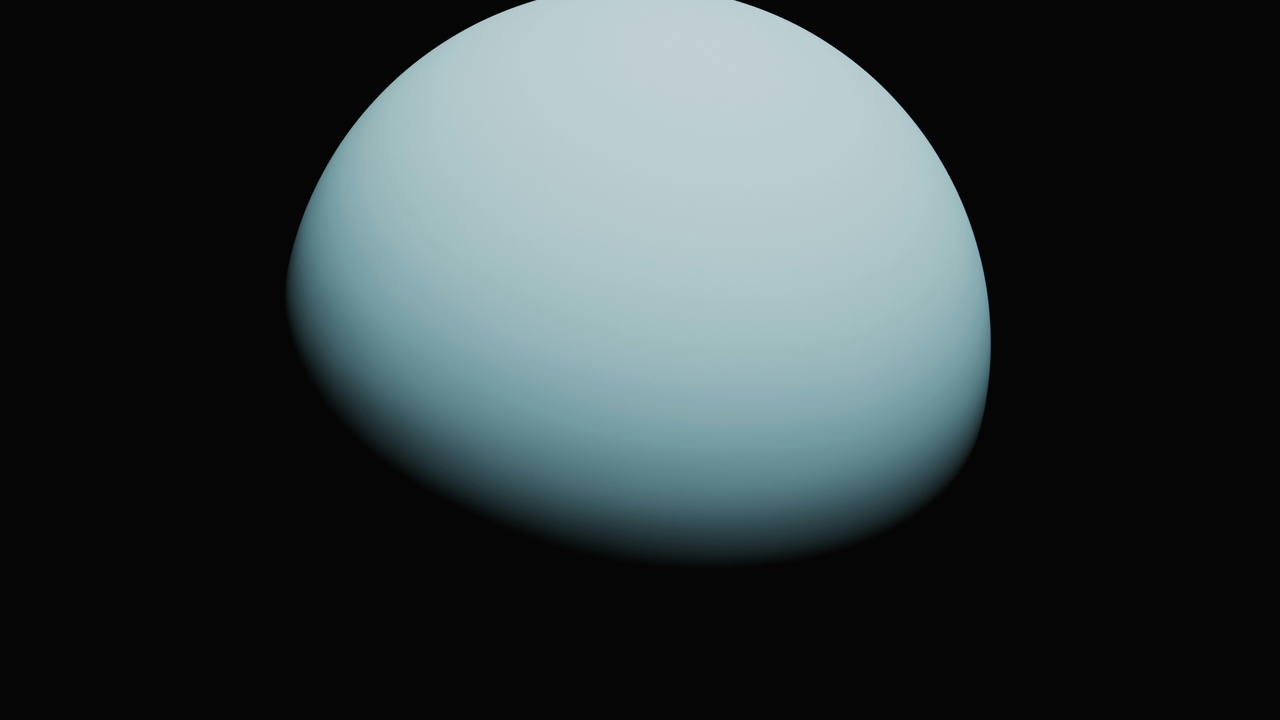
Ice giants differ from gas giants in composition and scale: they’re richer in water, ammonia and methane “ices” and are smaller and colder. Uranus and Neptune are still far larger than Earth, and each has atmospheric dynamics, magnetic behavior and moon systems that provide clues to how planetary systems form and evolve. Voyager 2 flybys provided our close-up snapshots and baseline data for both planets.
Below are profiles of both ice giants, including the key numbers that show why they’re grouped together yet remain distinct from the gas giants.
4. Uranus — the tilted ice giant (≈14.54 Earth masses)
Uranus has a diameter of about 50,724 km (≈4× Earth), a mass near 14.54 Earth masses and a volume roughly 63 times that of Earth (NASA). Its most famous trait is an axial tilt of about 98°, which produces extreme seasonal variations as the planet effectively rolls along its orbit.
That tilt—and the planet’s mixture of hydrogen, helium and volatile ices—offers strong constraints on models of planetary migration and giant impacts in the early Solar System. Voyager 2’s 1986 flyby remains the primary source for detailed images and measurements, and Uranus’s moons (like Miranda) show bizarre geology that hints at a violent past.
5. Neptune — the windy ice giant (≈17.15 Earth masses)
Neptune’s diameter is about 49,244 km (≈3.9× Earth), its mass is approximately 17.15 Earth masses, and its volume is near 57.7 Earths (NASA). Voyager 2 flew past Neptune in 1989 and discovered fierce winds, powerful storms such as the transient Great Dark Spot, and active geology on Triton.
Neptune’s gravity helps shape the distant Kuiper Belt and influences populations of small bodies beyond Pluto. Triton—likely a captured Kuiper Belt object on a retrograde orbit—shows cryovolcanism and resurfacing, making it one of the most interesting moons for future study.
Summary
Quick takeaways: only five Solar System bodies are larger than Earth — the Sun plus the four giants — and those differences in size drive gravity, atmospheres, magnetic environments and orbital behavior. Observations from missions like Voyager 2 (1986, 1989), Cassini (1997–2017) and Juno (current) keep refining our picture, and upcoming studies (Europa Clipper, ongoing JWST work) will continue to change what we know.
- The five objects larger than Earth: the Sun, Jupiter, Saturn, Uranus and Neptune.
- Size shapes everything: mass determines gravity, which governs orbits, atmospheres and the potential for moons to retain heat or oceans.
- Key missions and data sources: Voyager, Cassini, Juno, and observatories like the James Webb Space Telescope are essential for learning more.
- Keep watching: follow those missions and new data releases to see how our understanding of these larger Solar System worlds keeps evolving.
Enjoyed this article?
Get daily 10-minute PDFs about astronomy to read before bed!
Sign up for our upcoming micro-learning service where you will learn something new about space and beyond every day while winding down.
Discover more from GTFyi.com
Subscribe to get the latest posts sent to your email.